When Amenities Impress You but Fail Your Investment
Walk into almost any new residential project in Istanbul and the experience feels familiar. A grand lobby with hotel lighting. A polished gym. A spa that signals luxury. A pool framed perfectly for the brochure. Everything is designed to impress at first glance, and it usually works. Buyers feel reassured. Investors feel confident. The project feels premium. But the uncomfortable truth is this: most amenities are built to close deals, not to protect returns.
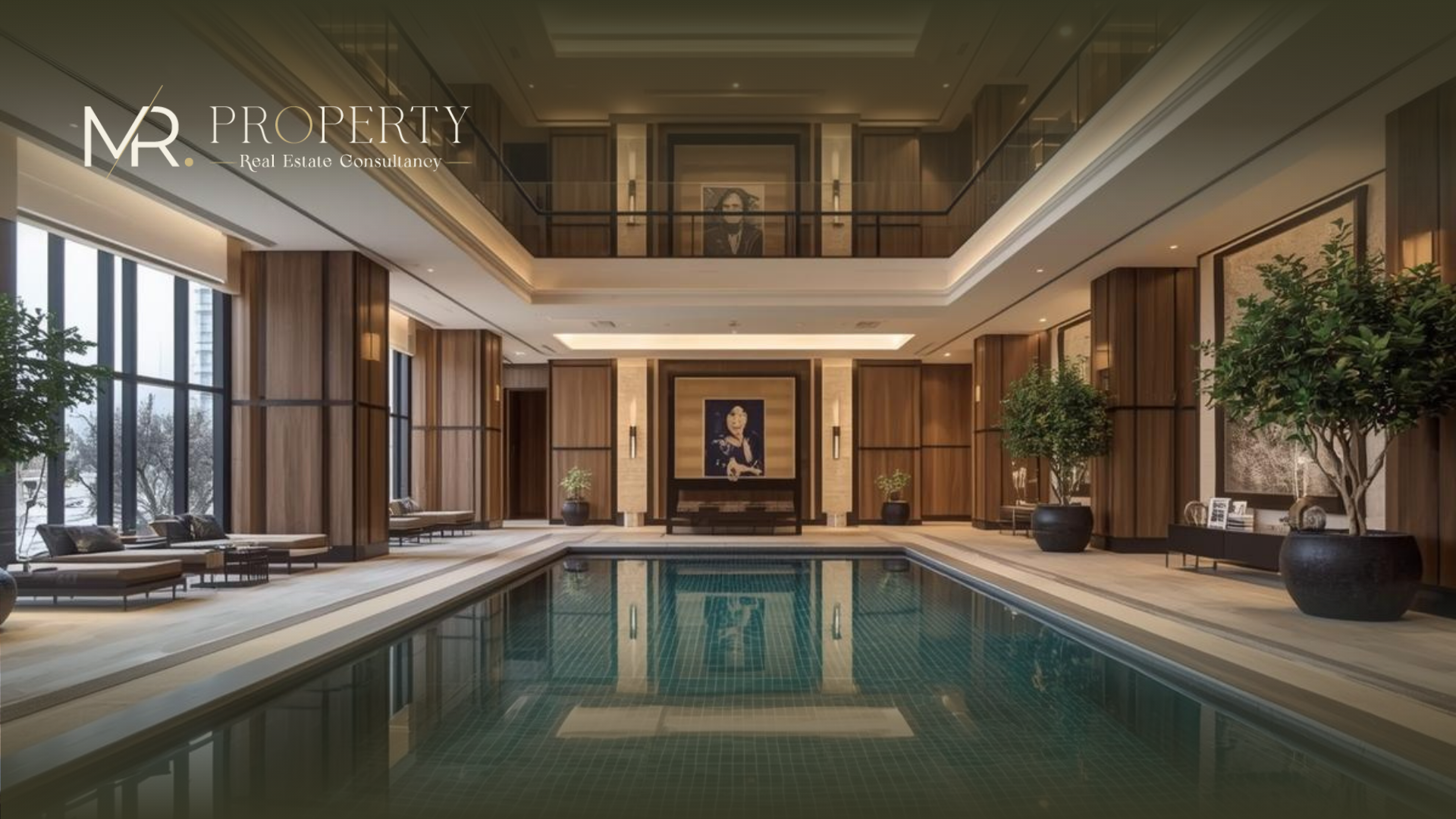
Amenities create an emotional response. They make a project feel modern, elevated, and desirable. Yet when the market begins to operate as a market rather than a showroom, many of these features quietly stop contributing to performance. The gym becomes underused.
The sauna becomes a recurring expense. The pool becomes a maintenance line item that never shows up in projected ROI calculations.
The problem is not that amenities exist. The problem is that they are often mistaken for value.
Why Amenities Sell Faster Than They Perform
Amenities photograph well. They compress luxury into a visual language that is easy to market and easy to sell. Developers know this. Buyers respond to it. Investors often mistake it for a signal of strength.
But amenities do not create demand on their own. They amplify demand only when demand already exists.
A gym does not attract tenants if the location is inconvenient. A pool does not increase rental depth if the tenant profile does not value it. A spa does not protect resale value if the neighborhood lacks movement. When fundamentals are weak, amenities become cosmetic solutions to structural problems.
They sell emotion at entry, but they do not guarantee performance over time.
The Difference Between Visual Value and Economic Value
Visual value is immediate. Economic value is delayed.
Visual value is how impressive a project feels when you walk through it. Economic value is how the asset behaves when tenants choose, when costs accumulate, and when buyers compare alternatives in a real market.
Many investors confuse the two. They assume that a long list of facilities automatically translates into higher rent or stronger resale. In practice, this only happens when amenities support an already strong ecosystem.
A luxury lobby does not compensate for weak transit access. A spa does not fix low rental demand. A pool does not offset poor tenant turnover. When amenities are not aligned with location, demand profile, and neighborhood behavior, they add cost without adding value.
How Amenities Quietly Erode Returns
One of the most overlooked aspects of amenity-heavy projects is operating cost. Facilities require maintenance, staffing, utilities, insurance, and long-term refurbishment. These costs are shared by owners through service charges, regardless of whether the amenities are used.
For investors, this matters. Every increase in monthly maintenance reduces net yield. Every underutilized facility becomes a permanent expense that does not contribute proportionally to income.
In many projects, amenities inflate expectations but not rent. Tenants may appreciate the presence of facilities, but they rarely pay meaningfully more for them if similar features exist across competing buildings. As a result, operating costs rise faster than rental income.
This is how amenities turn from selling points into liabilities.
Why Tenants Do Not Choose Properties the Way Buyers Do
Buyers are influenced by aspiration. Tenants are influenced by practicality.
When tenants choose where to live, they prioritize access, commute time, neighborhood life, pricing, and reliability. Amenities are secondary. They matter only when all primary needs are already met.
A tenant will accept a simpler building closer to work over a luxury building that adds thirty minutes to their commute. A family will prioritize school access and daily convenience over a spa they will never use. A professional renter will value location and layout over facilities that raise service charges.
Investors who assume tenants behave like buyers often misjudge demand.
Resale Reality: What Buyers Actually Pay For
The same logic applies at exit.
When it is time to resell, buyers compare options based on location, price, rental potential, and liquidity. Amenities rarely command a premium unless they are rare, relevant, and aligned with the market segment.
In districts where most new projects offer similar facilities, amenities stop being differentiators. They become baseline expectations. What differentiates value is how easily the unit rents, how stable the tenant base is, and how the neighborhood has evolved.
Projects overloaded with amenities in average locations often struggle to justify pricing during resale. Buyers recognize the cost structure and discount accordingly.
When Amenities Do Add Real Value
Amenities are not inherently negative. They add value when they reinforce fundamentals rather than attempt to replace them.
In strong locations with dense movement, amenities can enhance tenant experience and support higher-quality demand. In family-oriented districts, practical amenities such as green areas, playgrounds, and security can support long-term occupancy. In ultra-luxury segments, limited, high-quality facilities can complement exclusivity rather than inflate costs.
The key is alignment. Amenities must match the tenant profile, the neighborhood rhythm, and the price point. When they do, they support performance. When they do not, they dilute it.
What Actually Protects an Investment
Strong investments are not built on amenity lists. They are built on fundamentals that persist across cycles.
Location that supports daily life. Transit access that reduces friction. Neighborhoods with real movement, not speculative hype. Rental markets with depth rather than seasonality.
Developers with delivery discipline. Legal structures that protect ownership.
Amenities can support these pillars, but they cannot replace them.
An investment succeeds because people need to live there, work nearby, and remain in the area over time. No amount of luxury finishes compensates for weak fundamentals.
The Investor’s Discipline: Performance Over Presentation
Many investors fall into the same trap. They equate luxury with safety and facilities with future value. They assume that more features mean higher returns.
In reality, amenities without demand create expectations, not appreciation. They raise fixed costs without guaranteeing higher income. They look impressive on launch day and become invisible on performance statements.
Disciplined investors strip away the presentation layer and evaluate how an asset behaves under pressure. They ask what matters when the brochure is forgotten. They look at what performs during vacancy, during resale, during market shifts.
They invest in behavior, not branding.
Asking the Right Questions Before You Buy
Before committing capital, experienced investors ask different questions. They focus on what will matter on the day the unit is rented. On the day it is resold. On the day the market tightens.
They evaluate whether amenities support tenant demand or simply inflate costs. They examine service charge history, not just projected budgets. They assess whether facilities are rare advantages or common expectations.
They understand that the real danger is not the amenities themselves, but the value assumed because of them.
What Ultimately Determines Value
Amenities impress quickly. Fundamentals perform slowly.
The projects that succeed over time are not those with the longest feature lists, but those anchored in real demand, practical living, and stable neighborhoods. Amenities become an advantage only when they serve that foundation.
The real risk is not buying a project with amenities. It is buying a project because of them.
When presentation fades, performance remains. And performance is what determines whether an investment grows quietly or disappoints slowly.
Contact MR PROPERTY to evaluate whether a project’s amenities support real performance or simply decorate weak fundamentals before you commit capital.